


You set a course, you explain it, and three weeks later nothing has really moved. Nobody openly objects, but the team isn't following. For an SME leader or manager, it is one of the most draining situations: you don't know whether the problem lies with the project, the people or yourself. Here are five signs not to ignore, and what they most often mean.
1. Meetings are quiet, corridors much less so
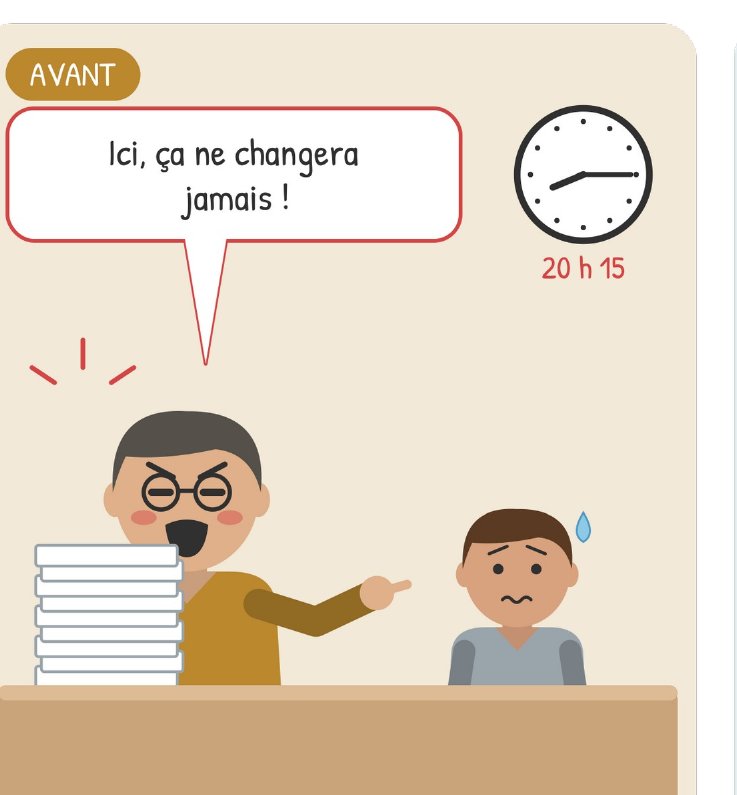
In meetings, everyone nods. The real objections come out afterwards, at the coffee machine or on the messaging app. This silence is not buy-in: it is a sign that the team does not feel allowed, or does not see the point, to voice disagreement in front of you.
2. The same issues keep coming back without being settled
The schedule, the allocation of clients, the shared tool: every month, the discussion starts again from scratch. When an issue goes round in circles, what is often missing is a simple rule: who decides, on what criteria, and when the decision is considered made.
3. Decisions are not applied
The decision is recorded, then everyone interprets it in their own way, or carries on as before. This is not necessarily ill will. Often, the “why” has not been shared, or the decision clashes with constraints on the ground that nobody dared to raise.
4. Everything comes back to you
The smallest trade-off lands on your desk. You feel indispensable, and that is precisely the problem: the team has learned that it is better to wait for your opinion than to take a risk. In the long run, you become the bottleneck of your own business.
5. Your best people step back
Those who used to suggest ideas no longer do. They do their job, properly, but without drive. This is the most discreet and the most costly sign: when the energy of the team's driving forces drops, departures are often not far off.
What these signs really say
Taken one by one, these signs look like individual motivation problems. Taken together, they almost always point to how the team works as a whole:
- clarity : are the objective, the roles and the decision rules the same for everyone?
- trust : can people say “I disagree” or “I got it wrong” without risk?
- the leader's place : does your way of deciding leave room for the team?
It is not a question of a good or a bad team. It is a question of the rules of the game, and the rules of the game can be worked on.
Where to start
- Name what you observe, without looking for someone to blame: “I have the feeling our decisions don't stick. What's getting in the way?”
- Listen before you answer : let the team finish, even if it is uncomfortable.
- Clarify a single decision rule on an issue that keeps going round in circles, and stick to it.
- Step back with an outside view when you are yourself part of the situation.
The manager's role weighs heavily on a team's engagement: this is what the article explores Manager-coach: 70% of a team's engagement depends on the manager.
I experienced this during a transformation assignment in a large industrial group. Responsibilities were unclear, and one team leader in particular found herself stuck in her role. I first worked with her manager so that he could adapt his stance to the situation. Together, we gave her back a voice so that she could say what did not suit her in her role. We then organised reflection workshops involving all the stakeholders concerned. The result: clarified roles, a person who felt psychologically safe and, at last, “unblocked”.
Team coaching in Montauban to get your team moving again
If you recognise two or three of these signs, the simplest thing is to talk about it. I offer a free team diagnostic lasting one hour, on site or by video call, to put words on the situation and see what can improve it. I am based in Montauban and work on site in Toulouse, in Tarn-et-Garonne and anywhere in France, or remotely by video call.