

Booming, #ecodesign is finally bringing meaning and ethics back into engineering, whether IT or otherwise. Where do we really stand in our practices? What place does it really hold? Have companies grasped the challenges ahead? Beware of the infamous greenwashing! How can we make sure we are playing the game properly? But which game?
The standards
- The international standard ISO 14040 and the associated LCA methodology (Life Cycle Assessment) make it possible to assess the environmental impacts of a product, service or process throughout its life cycle, from the extraction of raw materials to its end of life. It aims to provide an overall view of environmental impacts by taking all stages into account, including manufacturing, use and end-of-life treatment (recycling or disposal)
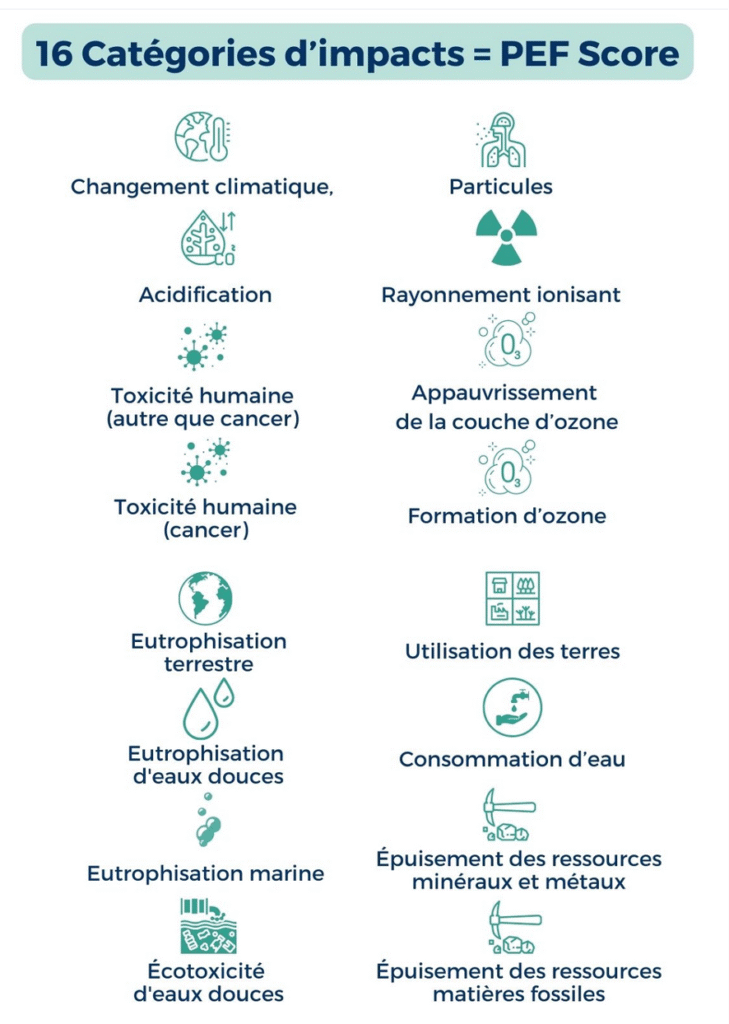
- The methodology in question aims to measure the “#PEF ” score (Product Environmental Footprint): a standardised assessment of products’ environmental performance, designed to make it easier to compare different products and to encourage decisions based on reliable environmental data. We are right at the heart of our Product Management discipline, which gains a revolutionary new dimension in terms of value proposition. A proposition ready-made in the 16 impact categories measured:
- The #RGESN (French general framework for the eco-design of digital services). A framework set up in France to help reduce the ecological footprint of digital services. It is part of a broader effort by the French State to reduce the environmental impact of digital technology. This framework provides recommendations and good practices for designing, developing and using digital services in a more environmentally responsible way.
People ahead of the curve?
That is the question I asked myself when I recently had the pleasure of meeting up again with my old friends from the consulting firm Quadran , which for several years has expanded into software publishing. Among their solutions: #appYuser and #appYplanet. I am not one to give free advertising to help friends. I only do it when I admire what they do. I knew the first product, #appYuser, which measures site performance, digital experiences and the impact on conversions. I discovered their new product: #appYplanet. It aims to measure the environmental impacts of websites. And it does so in a systemicway, meaning it takes into account ALL the criteria of the standards mentioned above, analysing how they interact (the result of a collaboration with experts in the field, the start-up Resilio from EPFL in Lausanne).
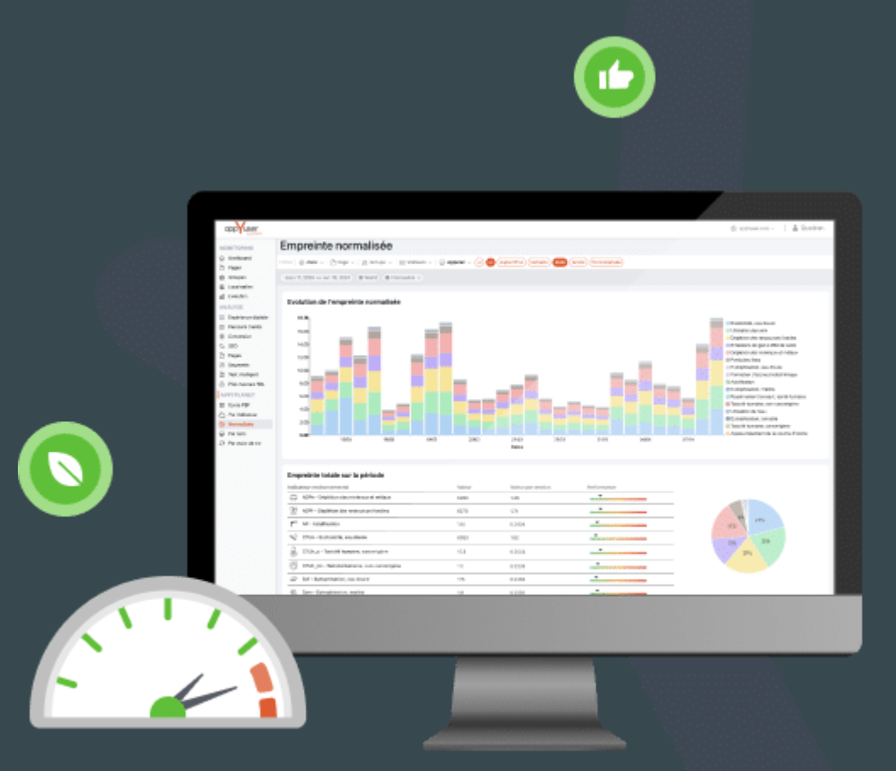
I like their solutions for more than one reason:
- The cause served by #appYplanet : the environment. This is no hot air, no greenwashing: everything is there to measure the #PEF factually, without cheating.
- The systemic approach so dear to us, agile mentors and companions of change. Example: we work on eco-design with #appYplanet and we also get benefits on the digital experience that #appYuser can measure. Examples: lighter pages (shorter loading times, hence a better experience); a simplified user journey: a better experience for users who do not get lost; analysing server sizing against actual needs: savings, ecology and an optimal digital experience
- The intrinsic value their solutions bring: CONCRETE FEEDBACK ! We so often complain that companies do not give themselves enough means to measure the success of their transformations. Well, here are some highly relevant avenues! Real things, real measurement, at last!
Let’s go further. At first glance, you might think eco-design is struggling to develop as it should given the climate stakes, and you cannot help thinking of a PUNITIVE side to it. “The environmentalists mean well, but I have a product to deliver and market share to win.” Two points seem to me able to put an end to this idea:
- A real application methodology, as recommended by the standards and implemented by #appYplanet, covers every phase of the life cycle. Upstream of development, there is the in-depth reflection on the usefulness of each product feature, which is in itself an environmental gain, as well as the ratio of user benefit to environmental cost.
- Staying competitive will now mean being the most efficient at complying with growing environmental regulations that no one will be able to escape
Punishment or reward?
Companies will therefore have to face a new vision of competitiveness, by fully integrating the new standards they will have to meet while keeping the logic of intrinsic value for the user. Not to mention that the environmental footprint now is part of the new expectations of users and is becoming a real differentiator!
According to their creators, #appYuser and #appYplanet actually form a single product which, depending on the objectives, can either:
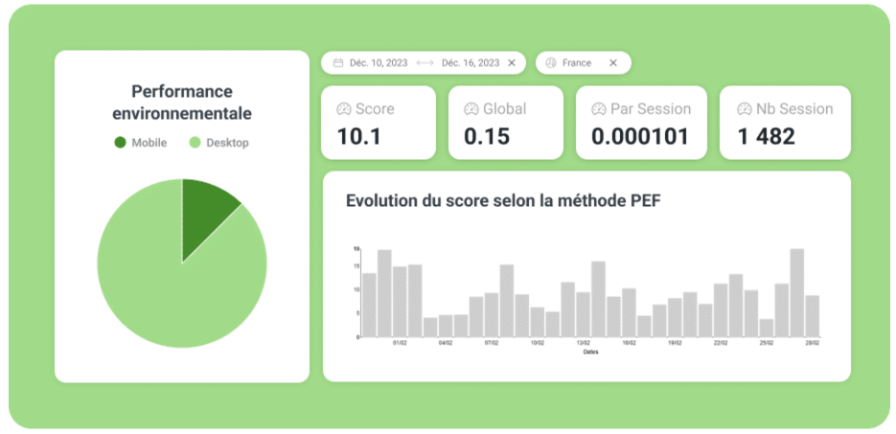
- Help improve digital experiences and conversions (while measuring ecological impacts according to the #PEF criteria and its 16 indicators), or
- Focus on the site’s eco-design and measure its real impact on digital experiences and conversions.
These two axes are what make this solution smart and what make eco-design non-punitive. Indeed, eco-design generally improves the digital experience (shorter journeys, shorter sessions) and increases conversions, whatever they are.
Where do agility and coaching fit in?
Agility, which from its very beginnings put meaning and people into its definition, can only embrace this new dimension of value. And it already does so without knowing it. For example, the Lean Startup approach consists in making sure that you only develop what users really expect. OK, what users expect does not necessarily have a good #PEF score, but it is a first step.
As for coaching, it has more of a place than ever. We are facing a considerable paradigm shift: moving from a purely economic logic to an economic and environmental logic. Changes in beliefs, value systems, capabilities and ultimately behaviours, at every level of the company (product management, development sourcing, deployment, decommissioning, governance), in the service of a new form of operational performance, do not happen at the snap of a finger: they truly require the power of coaching.
Supporting this paradigm shift
Integrating eco-design means changing practices, decision criteria and often the organisational culture. Based in Montauban, I support product teams, managers and leadership teams in these transformations, through Lean-Agile consulting as well as team and executive coaching, on site in Montauban, in Toulouse and anywhere in France, or remotely by video call.